Physiotherapy for back pain · St. Louis
Physiotherapy for back pain: a physician-directed program for discs, facets and sciatica
Physiotherapy for back pain at Back Pain STL is a set of treatments, such as heat, traction, vibration, laser and TENS, plus home exercises, that a physician orders and supervises. It is built for low back pain, sciatica, and disc and facet problems, and it is measured from your first visit to your last.
Most people with a bad back have already been handed a sheet of exercises or a few weeks of generic therapy. When that does not work, it is usually because nobody first worked out what was driving the pain. A disc that hates bending and a facet joint that hates arching need opposite plans. So here, the exam comes first, every treatment is ordered for a reason, and your progress is scored the same way each time.
What is the physician-directed physiotherapy program?
On paper it is called the Physician-Directed Physiotherapy Program: Neuromuscular Modality Re-Education Protocol. Taken one piece at a time:
- Physician-directed: a medical doctor examines your back, orders each treatment and oversees your care.
- Physiotherapy: treatment that uses heat, cold, stretch, movement, light, sound waves and mild electrical signals to help tissue heal.
- Neuromuscular re-education: getting the nerves and the small spine muscles that went quiet after an injury to work together again.
- Modality: the name for each machine or method.
- Protocol: a single written plan that every visit follows step for step.
Who runs it?
Back Pain STL runs this program under Dr. Gurpreet Singh Padda, MD, MBA, MHP, the Physician Medical Director at Back Pain STL. Every order comes from a physician who has examined your back and who examines it again at each re-check. Technicians trained on each machine carry those orders out, and nobody works a machine solo until they have been signed off on it.
Technicians here are not physical therapists, and they will never describe themselves that way. Diagnosis, settings and any added treatment are decisions for your physician alone.
What happens from the first visit to the last?
Step 1: Forms, once
You fill out new patient paperwork one time. We enter it once so nothing gets copied wrong.
Step 2: A physician exam of your back
The physician looks for the pain source: disc, facet joint, sacroiliac joint, nerve root or muscle. Then they write the orders: which treatments, at what settings, plus any tests or equipment.
Step 3: Your first treatment visit
You answer a short questionnaire about what your back stops you from doing. You learn your home exercises, and anything ordered for home, like a brace or a TENS unit, is fitted and explained.
Step 4: Each visit
Each visit opens with two checks: that a physician is on site, and a spoken run-through of the safety questions. After that you work through the stations on your orders.
Step 5: Tests, if ordered
If your physician wants a nerve test or a Measura assessment, we book it and keep asking about it until the result is in.
Step 6: Re-checks
At planned points the questionnaire is repeated and your back is examined again. At that point your back either moves on to a home plan, or your physician revises the orders and care goes on.
One back may settle in a visit or two; another may take 60 visits or more spread across months. The plan belongs to your physician, and it shifts as your back responds.
Which treatments are in the program?
Your physician decides which ones your back gets and how strong each setting is. Say the word, and any one of them ends right then. Tap a treatment to see how it helps a back, what it feels like and who should skip it.
Heat or cold
Cold settles a new flare; heat lets a guarded back relax so the rest of the visit works. About 10 to 15 minutes.
How it works for your back →Vibration platform
You stand on a gently buzzing platform holding the rails. It gets the small muscles that steady each vertebra firing again. About 10 minutes.
Timed one-on-one care: a technician is beside you the entire timeHow it works for your back →Traction chair
A reclining chair slowly stretches and releases the low back, taking pressure off discs and joints. About 15 minutes.
How it works for your back →Laser therapy
A handheld laser shines light into sore tissue around the spine to calm pain and swelling. Goggles stay on. About 10 minutes.
Timed one-on-one care: a technician is beside you the entire timeHow it works for your back →Shockwave therapy
Sound-wave pulses for stubborn tendon and muscle pain in the hip and buttock that rides along with back pain. Never on the spine; once a week at most.
How it works for your back →TENS
Sticky pads send a mild tingle that turns the pain signal down. It usually closes out the visit. About 15 minutes.
How it works for your back →When a visit uses every station, it moves from warming the tissue, to stretching it, to the targeted treatment, and finishes by settling the pain.
What do you do at home?
The machines help, but what you do at home decides how well a back recovers. At your first visit you learn the exercises your physician checks for your back, to do twice a day. Bring the log to each visit; your technician adds up your days and watches you do one exercise.
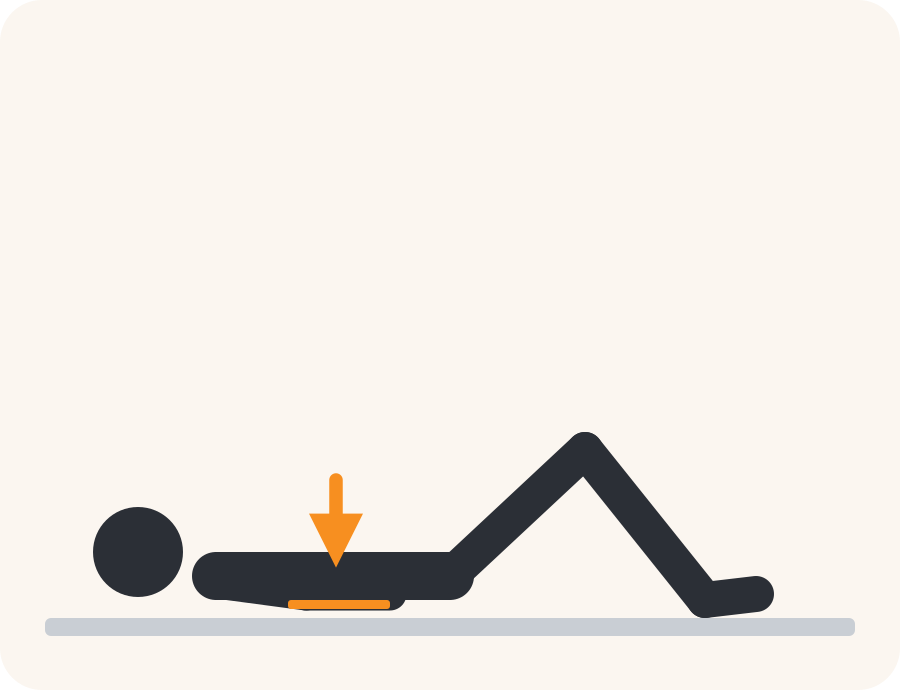
Pelvic tilt
Wakes up the deep belly muscles that brace the spine. A gentle first step for almost any sore back.
How it works for your back →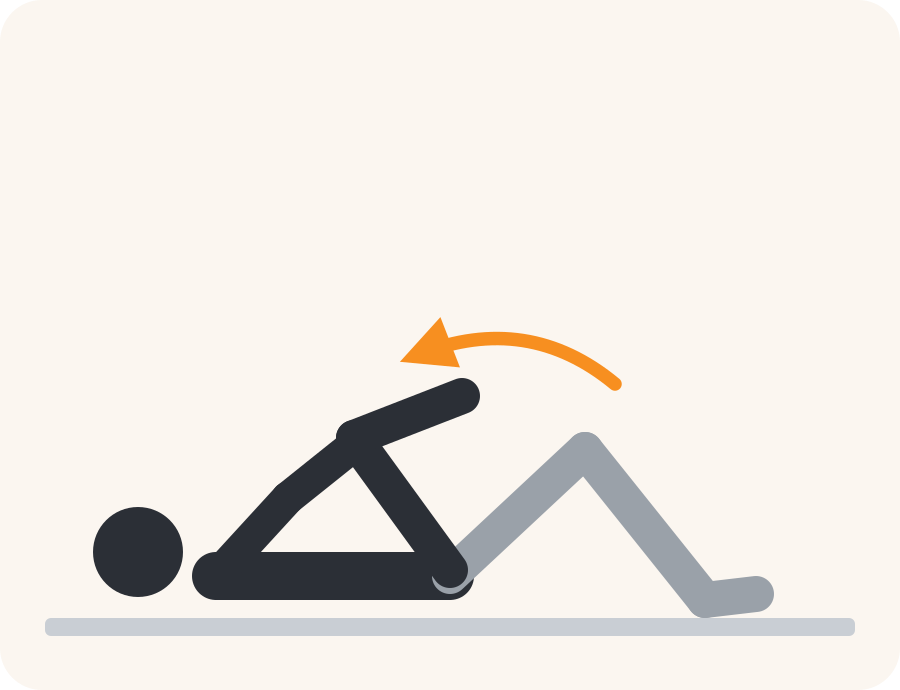
Knee to chest
A lying forward bend that often eases facet and stenosis pain.
How it works for your back →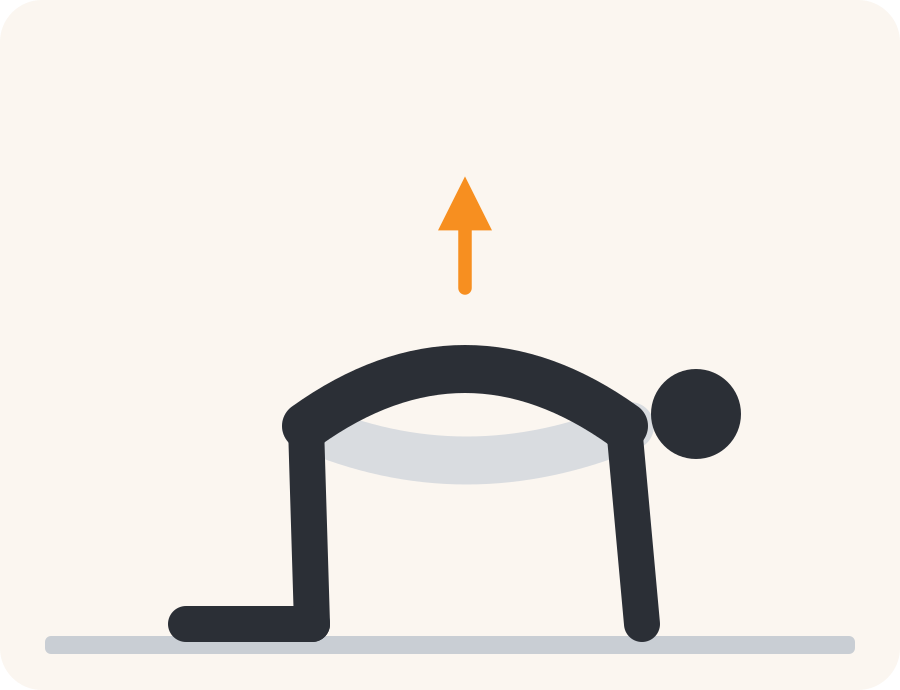
Cat and cow
Slow motion on hands and knees that loosens a stiff spine and feeds the discs.
How it works for your back →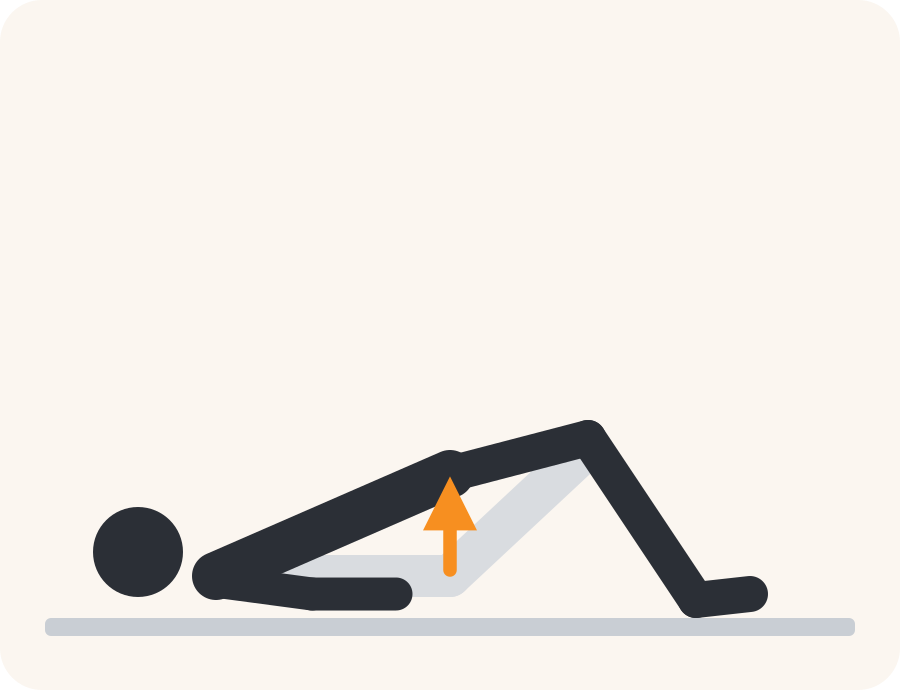
Bridge
Builds the buttock muscles so the hips, not the low back, take the load.
How it works for your back →Equipment ordered for home is fitted on you, demonstrated, and sent with written instructions. You sign for each piece once, and that signature is the record.
Home TENS unit
The clinic tingle at home, for flares after a drive or a work shift. Comes with its electrode pads.
How it works for your back →Exercise bands
Gentle, adjustable resistance to build your hips and core.
How it works for your back →Back brace
Support for the low back during long sitting, standing or lifting while it heals.
How it works for your back →Why do we talk about food on a back visit?
Diet and metabolic health coaching
High insulin stiffens the collagen in discs and facet joints, and belly fat keeps inflammation running all day. Both make a back hurt more and heal slower. So every visit includes a few minutes on what you eat. The written protocol you take home on day one begins with a 10-minute walk after every meal, then drops seed oils and sugar, asks for 7 or more hours of sleep, and keeps meals inside a set daily window.
Read the full eating protocol →The background is on our pages about metabolic health and back pain and a low-carb diet for back pain.
Which tests might your physician order?
Some backs need more than an exam to sort out. Any test your physician orders gets booked by us and followed at every visit until it is finished.
 KinetisenseCamera-based 3D scoring of how far your back bends and twists and how steady you stand.See the details →
The CMAT, Kinetisense and RQ tests are  assessments.
How do we measure whether your back is improving?
Pain scores swing with sleep, weather and the kind of day you had, so the bigger question we track is what your back lets you do. The Oswestry Disability Index is something you complete on day one and then again whenever your back is re-checked. It is a well-studied questionnaire about how low back pain affects sitting, standing, walking, lifting, sleep and travel. No one helps you answer it, so the scores truly come from you.
The index has a known threshold for meaningful change. A score that falls short of it prompts a new plan from your physician, with the reason recorded, so no one spends weeks on something that is not working. When Kinetisense is ordered, your bend and twist numbers are tracked the same way.
What happens at a re-check?
- Finished. Your last scores go home with you, along with a routine you can run without us.
- More time needed. Your physician records the reason to continue and what will be different, then books the next re-check. Repeating the old plan never counts as a reason.
When progress stalls, the conversation can turn to procedures, such as a medial branch block to test the facet joints, an epidural steroid injection for a pinched nerve, or PRP injections, long before anyone brings up surgery.
Frequently asked questions
Is this the same thing as physical therapy?
No. Licensed physical therapists deliver physical therapy. This program works differently: a physician writes and oversees every order, and trained technicians carry it out. How exercise is matched to a back is covered on our page about physical therapy for back pain.
Do I need a referral to start?
No referral is needed. Call (314) 886-5904 or schedule online, and bring any MRI or X-ray reports you already have. Our guide to what your lumbar MRI really shows is worth a read first.
Will physiotherapy help sciatica?
It can, once the source is clear. Leg pain from a pinched nerve root, a facet joint, the sacroiliac joint or the hip each needs a different plan, and an EMG may be ordered to tell them apart. See sciatica or referred pain.
Will the treatments hurt?
Expect warmth, a pulling stretch or a buzz. Shockwave is the one that can sting for a few seconds. Say so the instant anything hurts and the machine is turned off. If your back is in a fresh flare, read the first two weeks.
What if my back flares between visits?
Use the plan your physician gave you, such as cold, your gentle exercises or your home TENS unit, and call us if it does not settle. Our page on why back pain flares explains what a flare usually means.
Where is Back Pain STL?
We are at 12174 Natural Bridge Rd, Suite 301, St. Louis, MO 63044, at DePaul Hospital inside the I-270 and I-70 interchange, on the west side of the airport. Call (314) 886-5904 or text (314) 886-5902, Monday to Friday, 8:00 AM to 4:00 PM. Directions are on our contact page.
Start with an exam, not a guess
A physician sorts out what is driving your back pain, then builds the physiotherapy plan around it.
12174 Natural Bridge Rd, Suite 301
St. Louis, MO 63044
At DePaul Hospital on Natural Bridge Road, inside the I-270 and I-70 interchange, on the west side of the airport.
Sources
- Fairbank JC, Pynsent PB. The Oswestry Disability Index. Spine, 2000. PubMed 11074683
- Hides JA et al. Multifidus muscle recovery is not automatic after resolution of acute, first-episode low back pain. Spine, 1996. PubMed 8979323