Sleep and back pain
You are not sleeping badly because your back hurts. Both of those are happening to each other.
Sleep is treated as a symptom of back pain and asked about last, if at all. It is closer to a driver. It is measurable. And it is one of the few things in this picture that responds fast enough to notice.
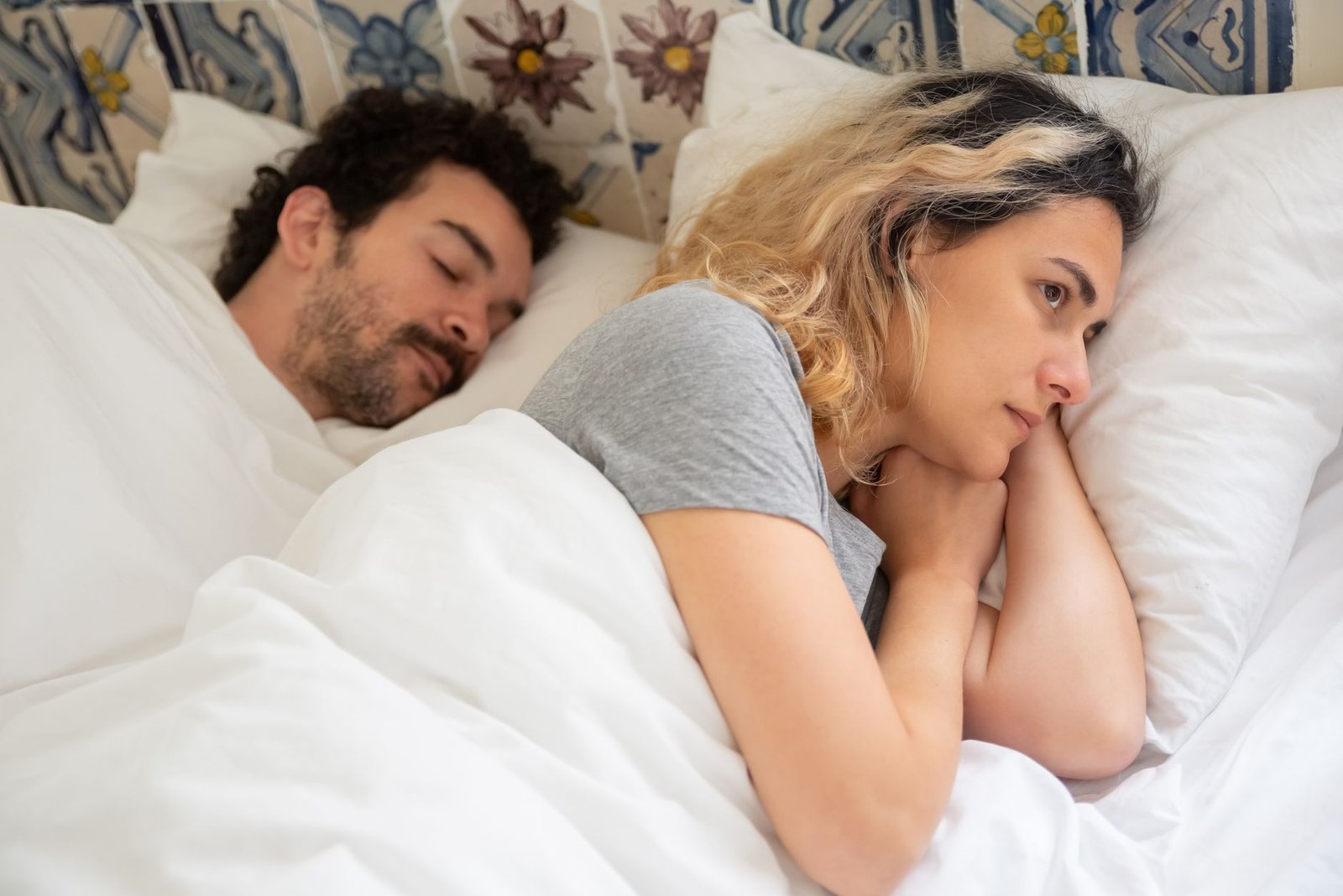
Can lack of sleep cause back pain?
The obvious model is that pain wrecks sleep. That is true, and it is the less useful half. The experimental evidence runs strongly the other way as well. Cutting or breaking up sleep in healthy people lowers their pain threshold the next day. It does so reliably enough that short sleep is now treated as a predictor of pain, not only a result of it.
So the honest description is a loop, and loops can be entered from either side. That is good news, because in the short term the sleep side is easier to change than the spine side.
How does poor sleep make back pain worse?
- Repair happens at night. Slow-wave sleep (deep sleep) is when growth hormone is released. It is also when connective tissue turnover is concentrated. A disc refills with water while you lie down and unload it. Cut the night short and you cut the repair window short. So the tiny damage of the day carries forward into the next one.
- Descending inhibition is restored by sleep. Your nervous system has a system for turning pain signals down on the way up. It works less well with sleep loss. That is why the same back is a five on Tuesday and an eight on Friday with no change in the tissue at all.
- Short sleep raises inflammatory tone and drives insulin resistance. This is measurable after only a few nights in healthy volunteers. It feeds straight into the metabolic terrain that keeps chronic back pain running. That is where the loop closes back onto the spine.
The fourth factor is not physiological, and it belongs here anyway. Poor sleep is concentrated in people working rotating and night shifts. In this region that means the distribution and logistics workforce along the 270 corridor and around the airport. Their schedule is set by somebody else. Telling them to prioritize sleep hygiene without saying so is not advice. It is a way of moving responsibility for a structural problem onto the person living inside it.
How can you sleep better with back pain?
- Anchor the wake time, not the bedtime. A fixed rise time is what steadies your body clock; bedtime follows it. For most people this is the single highest-yield change, and it is free.
- Get bright light early and reduce it late. Morning light outdoors sets the clock more powerfully than anything indoors. Evening light delays it. On a night shift the same rule applies, with the timing flipped on purpose.
- Stop eating close to sleep. Late eating worsens both sleep structure and glucose handling. In this population those are the same problem.
- Fix the position, then stop optimizing it. Lying on your side with a pillow between the knees, or on your back with a pillow under them, relieves most people. Beyond that, mattress and pillow shopping gives quickly shrinking returns. It becomes its own source of anxiety.
- Treat the sleep disorder if there is one. Obstructive sleep apnea runs high in this population. It goes undiagnosed for years and blunts every other item above it. Snoring, waking unrefreshed, or a partner who has watched the breathing stop points to a sleep study, not to a habit change.
Where a procedure fits. When pain truly keeps you from falling asleep, telling you to sleep better is useless. That is exactly where interventional treatment earns its place. It quiets the signal enough for the sleep work to become possible. The injection is not the treatment. It is what makes the treatment possible.
Why this is not filler advice
Lifestyle and behavioral work is roughly 40 to 50 percent of the treatment protocol here. It is prescribed, not suggested. That is not a wellness posture. It is a reading of where the leverage is. Interventional procedures buy a window of quiet. What happens inside that window — sleep restored, load brought back, terrain addressed — decides whether you are back in this clinic in a year.
The behavioral part, Acceptance and Commitment Therapy, is delivered in-house by a licensed clinician trained in pain. It is not referred out. A referral to somebody else’s waiting list is how this part of the plan quietly stops happening. And it is the part that most reliably keeps the window open.
Frequently asked questions
What are the best sleeping positions for back pain?
Lying on your side with a pillow between the knees suits most people, especially with disc-related or sacroiliac pain. Lying on your back with a pillow under the knees suits many with facet or stenosis patterns. That is because it reduces lumbar extension (backward arching). Lying face down is the least well tolerated for most. Use what reduces your pain and then stop researching it — the search itself gets in the way of sleep.
Should I take something to sleep?
Short-term, occasionally, and with a clear plan for stopping. Sedatives suppress the slow-wave sleep you are trying to restore. So a drugged night is not the same as a repaired one. Behavioral treatment for insomnia beats medication over any meaningful stretch of time. It is what we organize. Protecting two nights is the highest-yield move in a flare.
My back only hurts when I first get up. Is that meaningful?
Yes. Brief morning stiffness that eases within half an hour is typical of mechanical and facet-driven pain. Long morning stiffness lasting well over an hour in a younger adult points toward inflammatory disease. It is one of the findings on the urgent list.
Does a new mattress help?
Medium-firm suits most people, and the evidence beyond that is thin. It is a reasonable thing to change once if yours is old or sagging. It is not a treatment. It should not be the first thing you spend money on.
Why is my back pain worse after a bad night’s sleep?
Because sleep restores the system your nervous system uses to turn pain signals down on the way up. When sleep runs short, that system works less well. So the same back can feel like a five on Tuesday and an eight on Friday with no change in the tissue at all. Two short nights can lower your pain threshold enough to set off a flare.
Could sleep apnea be making my back pain worse?
It can. Obstructive sleep apnea runs high in people with chronic back pain. It often goes undiagnosed for years and blunts every other sleep change you make. Loud snoring, waking up unrefreshed, or a partner who has watched your breathing stop all point to a sleep study, not another habit change. If there is a sleep disorder, it gets treated as part of the plan.
I work night shifts. Does the sleep advice still apply?
Yes, with the timing turned around on purpose. Keep a fixed wake time. Get bright light when your day starts. Cut light as your sleep time gets close. Shift all of it to fit your schedule. We also know somebody else sets that schedule. That is a problem with the work, not a failure of your discipline. We plan around it rather than lecture you about it.
Related reading
- What it quietly took
- Pain after back surgery
- Lumbar facet syndrome
- What happens at the first visit
- About Dr. Padda
Two short nights lower pain thresholds enough to produce a flare with no change in tissue. Why it flares, and the first 48 hours.
Tell us what your nights look like
It is the question that gets skipped and it changes the plan more than most of what happens in a scanner. Bring the sleep, the shift pattern and the pain together and we will treat them as one problem.
12174 Natural Bridge Rd, Suite 301
St. Louis, MO 63044
At DePaul Hospital on Natural Bridge Road, inside the I-270 and I-70 interchange, on the west side of the airport.
Sources
- Kelly GA et al. The association between chronic low back pain and sleep: a systematic review. The Clinical journal of pain, 2011. PubMed 20842008
- Silva S et al. Sleep as a prognostic factor in low back pain: a systematic review of prospective cohort studies and secondary analyses of randomized controlled trials. Sleep, 2024. PubMed 38300526
- Craige EA et al. Effects of non-pharmacological interventions on sleep in chronic low back pain: A systematic review and meta-analysis of randomised controlled trials. Sleep medicine reviews, 2023. PubMed 36805590
- Saini Y et al. Relationship Between Sleep Posture and Low Back Pain: A Systematic Review. Musculoskeletal care, 2025. PubMed 40338112