Knee to chest stretch · Low back pain · St. Louis
Knee to chest stretch for low back pain: easing a back that hates standing
The knee to chest stretch eases a tight low back. Lie on your back, hug one knee in with both hands until you feel a mild pull in your low back and buttock, and hold for 20 seconds. Do each leg 3 times.
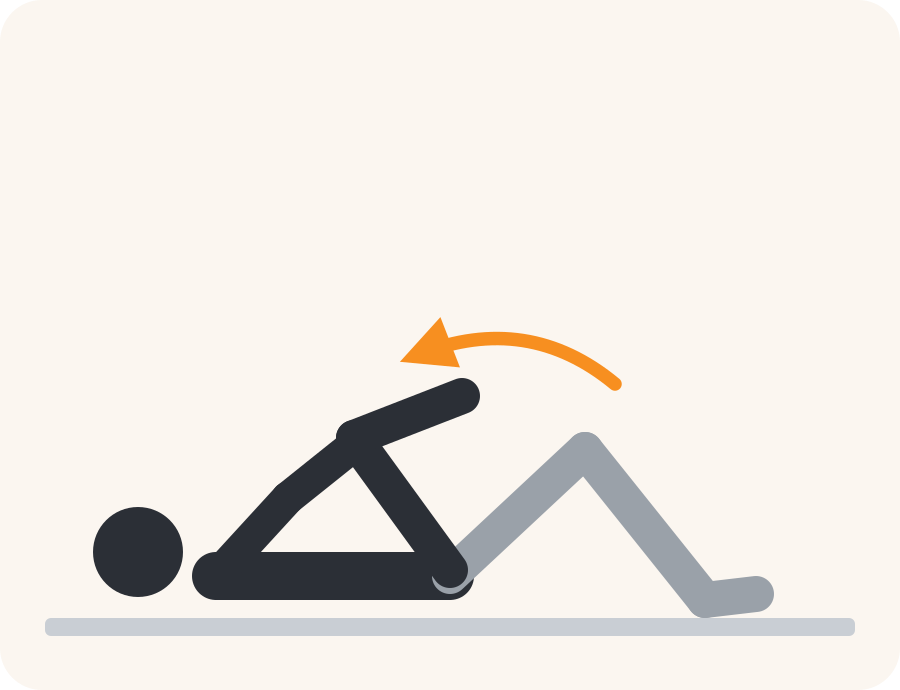
Only do this one if your physician put a check next to it on your home exercise sheet. Do every checked exercise two times a day, each day, whether your back feels good or sore, unless your sheet gives other directions.
How do you do the knee to chest?
- Start: Lie face up, knees bent, both feet flat on the floor.
- Move: Clasp both hands behind one knee and ease it slowly in toward your chest. Stop at a gentle pull. Then change legs.
- Repeat: Stay in the stretch for 20 seconds. Do it 3 times on each side.
How does the knee to chest help low back pain?
Bending forward opens the small facet joints at the back of the spine and widens the spaces where nerves leave it. That is why many people with facet pain or spinal stenosis feel better sitting than standing.
This stretch gives a stiff back that same forward bend while you lie down, with no weight on the spine. It also loosens the buttock muscles, which tend to lock up when the low back hurts.
Is it right for my kind of back pain?
It often helps backs that are worse standing and walking and better sitting, the pattern of facet joint pain and stenosis. A disc that flares when you bend or sit may not like it. Your physician checks it on your handout only if it fits your pattern. Our page on physical therapy for back pain explains why the direction of an exercise matters so much.
What mistakes should you avoid?
- Yanking the knee in fast or hard.
- Lifting your head and neck up from the floor.
- Staying in it through sharp pain or pain that shoots down the leg.
When should you stop and call us?
Mild stretch, mild effort and a little stiffness the next morning are expected. Stop and call (314) 886-5904 if you notice any of these:
- Sharp or stabbing pain in the back
- Pain that spreads farther down the leg than it was before
- Pain 2 or more points higher than your starting number that lasts over an hour
- New numbness, tingling or weakness in a leg or foot
Go to the emergency room for new trouble controlling your bladder or bowels, or numbness in the groin or inner thighs. Our page on back pain red flags explains why.
Keep a log and bring it in
Each time you finish your exercises, check a box, and once a day jot down a single pain number. Your technician tallies your days at every visit and has you perform one exercise to check your form.
Other low back exercises in the program
This page is part of our physiotherapy program for back pain, where a physician orders, supervises and re-checks every step.
Not sure which exercises fit your back?
A physician exam sorts out whether your pain comes from a disc, a facet joint, the sacroiliac joint or a nerve, and your exercises follow from that.
12174 Natural Bridge Rd, Suite 301
St. Louis, MO 63044
At DePaul Hospital on Natural Bridge Road, inside the I-270 and I-70 interchange, on the west side of the airport.