Pelvic tilt exercise · Low back pain · St. Louis
Pelvic tilt for low back pain: the first move most sore backs can make
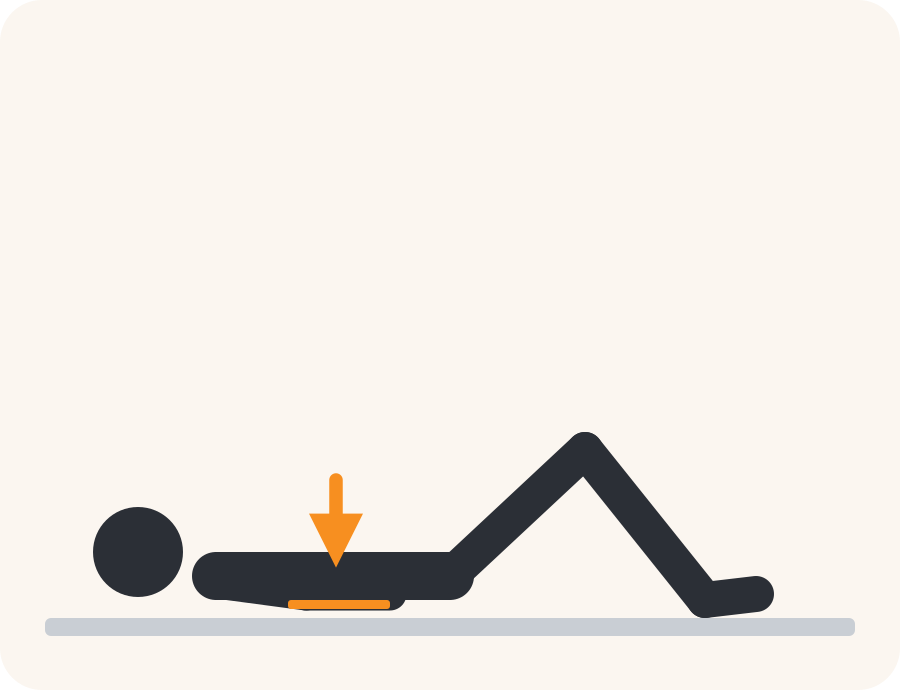
A pelvic tilt is a small floor exercise for low back pain. You lie on your back with knees bent, tighten your belly and flatten the small of your back against the floor. Hold it for 5 seconds, relax, and repeat 10 times.
Only do this one if your physician put a check next to it on your home exercise sheet. Do every checked exercise two times a day, each day, whether your back feels good or sore, unless your sheet gives other directions.
How do you do the pelvic tilt?
- Start: Lie face up on the floor or on a firm mattress. Bend both knees and plant your feet flat.
- Move: Pull your belly button in and press the curve of your low back down until it touches the floor.
- Repeat: Keep the press for a slow count of 5, let go, and do 10 in a row.
How does the pelvic tilt help low back pain?
The deep belly muscles act like a built-in corset for the lumbar spine. After a bad back episode they often go quiet, and the long muscles along the spine clench to make up for it. That clench is a big part of the ache you feel across your belt line.
A pelvic tilt wakes the corset up without loading a sore disc or pinching a facet joint. The motion is tiny, which is why it is usually the first exercise we check off, even in the first rough week of a flare.
Is it right for my kind of back pain?
It suits almost every back pattern we see: disc, facet, stenosis and sacroiliac. If even this small motion sends pain down your leg, stop and tell us, because that tells your physician something about the nerve. Our page on physical therapy for back pain explains why the direction of an exercise matters so much.
What mistakes should you avoid?
- Lifting your hips or shoving with your feet. The work comes from your belly, not your legs.
- Holding your breath. Breathe out slowly as you flatten your back.
- Pressing so hard that it hurts. Firm is enough.
When should you stop and call us?
Mild stretch, mild effort and a little stiffness the next morning are expected. Stop and call (314) 886-5904 if you notice any of these:
- Sharp or stabbing pain in the back
- Pain that spreads farther down the leg than it was before
- Pain 2 or more points higher than your starting number that lasts over an hour
- New numbness, tingling or weakness in a leg or foot
Go to the emergency room for new trouble controlling your bladder or bowels, or numbness in the groin or inner thighs. Our page on back pain red flags explains why.
Keep a log and bring it in
Each time you finish your exercises, check a box, and once a day jot down a single pain number. Your technician tallies your days at every visit and has you perform one exercise to check your form.
Other low back exercises in the program
This page is part of our physiotherapy program for back pain, where a physician orders, supervises and re-checks every step.
Not sure which exercises fit your back?
A physician exam sorts out whether your pain comes from a disc, a facet joint, the sacroiliac joint or a nerve, and your exercises follow from that.
12174 Natural Bridge Rd, Suite 301
St. Louis, MO 63044
At DePaul Hospital on Natural Bridge Road, inside the I-270 and I-70 interchange, on the west side of the airport.